Fiberglass Spray-Up Process: How It Works and Where It Is Used
The spray-up process (also called spray lay-up or chop spray) is an open-mold composite manufacturing method that is faster and more automated than the traditional hand lay-up method. It uses a specialized chopper gun to simultaneously spray resin and chopped glass fibers onto a mold surface.
How the Spray-Up Process Works
- Mold Preparation: The mold is cleaned and coated with a release agent, followed by a gelcoat layer (applied by spray).
- Spray Application: A chopper gun is used, which performs two functions simultaneously: it chops continuous glass fiber roving into short strands (typically 25-50mm) and atomizes catalyzed polyester resin. Both the chopped fibers and resin are sprayed together onto the mold surface.
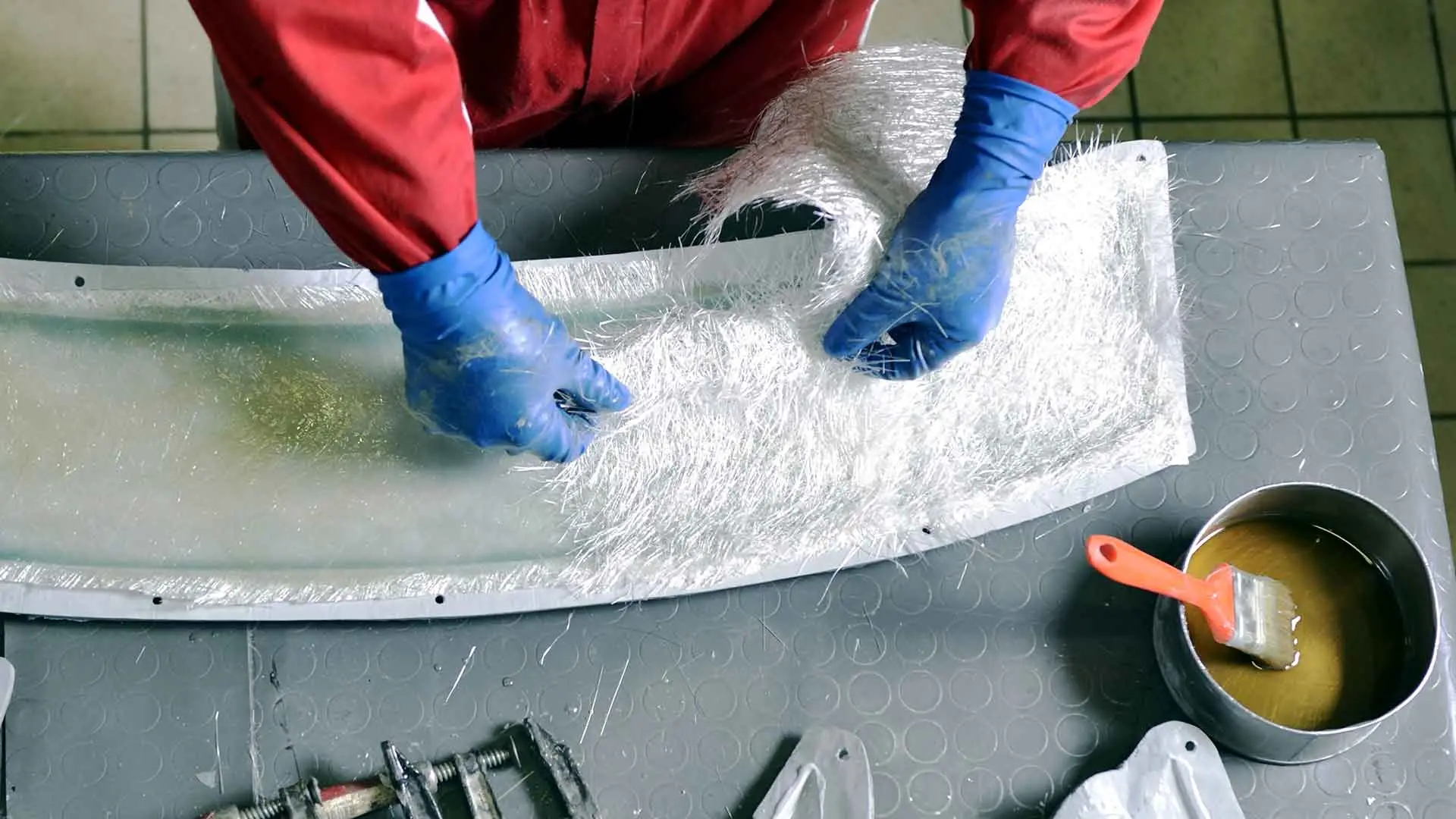
- Rolling / Consolidation: A worker uses a metal or mohair roller to compact the sprayed material, removing trapped air and ensuring thorough fiber wet-out.
- Build-Up and Cure: Multiple passes build the laminate to the desired thickness. The part then cures at ambient temperature.
Advantages Over Hand Lay-Up
- Significantly faster deposition rates (up to 5 kg/min of composite)
- Lower labor cost per part for large, simple shapes
- No need for pre-cut reinforcement patterns
Typical Products
Bathtubs, shower stalls, swimming pools, boat hulls, truck body panels, large storage tanks, and architectural elements.