Filament Winding Process: How Composite Pipes and Pressure Vessels Are Made
Filament winding is an automated composite manufacturing process where continuous fibers (typically glass or carbon) are impregnated with resin and precisely wound around a rotating mandrel (a cylindrical form) in controlled patterns.
How Filament Winding Works
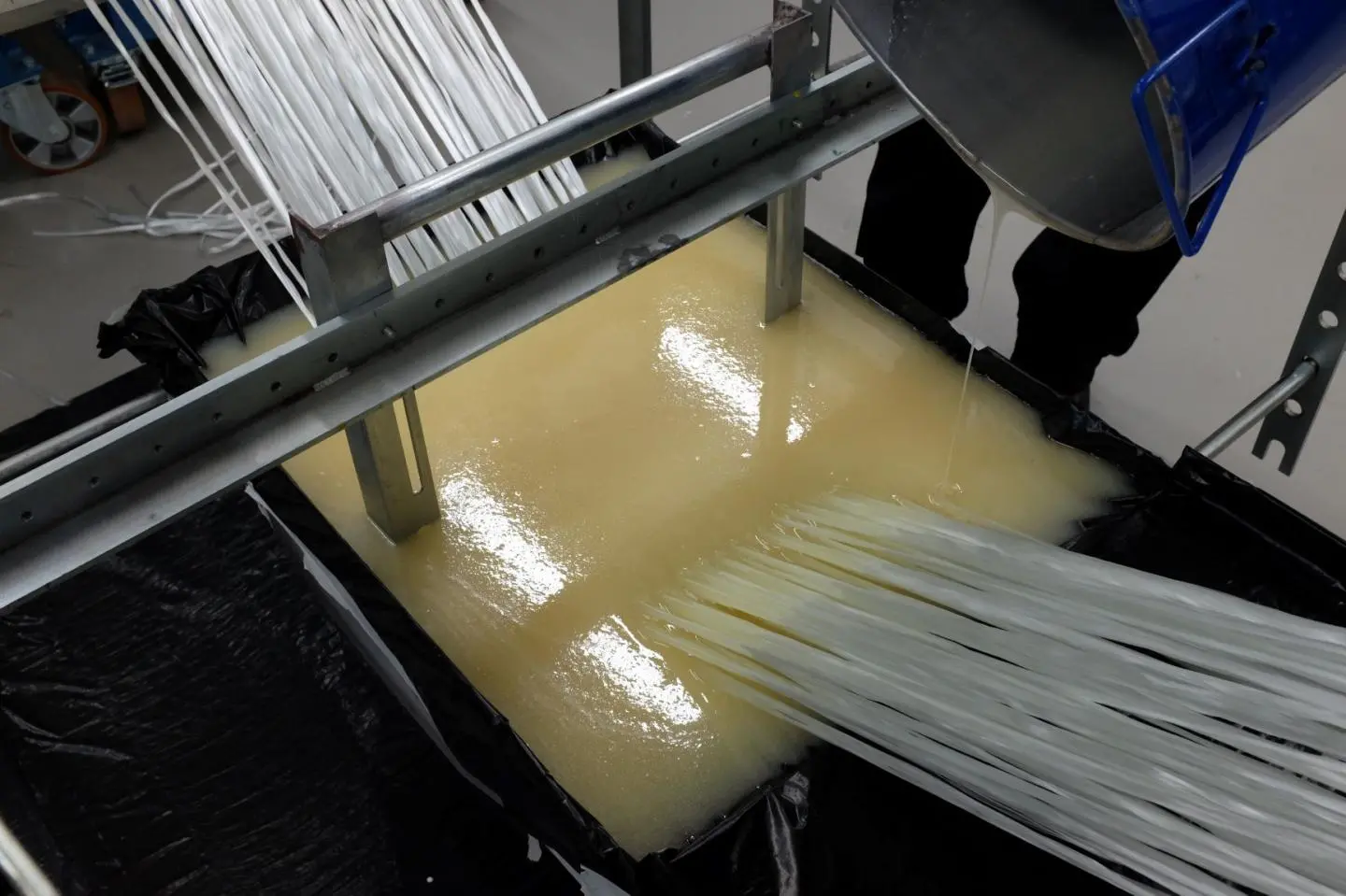
- Fiber Supply: Continuous glass fiber rovings are pulled from creels and passed through a resin impregnation bath.
- Winding: A computer-controlled carriage traverses back and forth along the length of a rotating mandrel, laying down the wet fibers in precise helical, circumferential, or polar patterns.
- Pattern Control: The winding angle determines the mechanical properties. A 90-degree (hoop) winding provides maximum circumferential strength (burst pressure resistance). A lower angle (e.g., 15 to 45 degrees) provides axial strength and stiffness.
- Curing: Once the required wall thickness is built up, the wound mandrel is placed in an oven to cure the resin at an elevated temperature.
- Mandrel Removal: After cure, the mandrel is extracted, leaving behind the finished hollow composite structure.
Products Made by Filament Winding
- High-pressure gas cylinders (CNG, hydrogen, oxygen)
- FRP pipes for water, oil, and chemical transport
- Rocket motor casings and aerospace fuel tanks
- Electrical insulator tubes
- Sports equipment (golf club shafts, fishing rods)