What is a Gelcoat and what are its different types?
A gelcoat is a specialized, pigmented resin coating applied as the outermost layer of a fiber-reinforced composite (FRP) part. It is the first material applied into a mold, and it becomes the durable, colorful, and weatherproof exterior surface of the finished product.
Why Use a Gelcoat?
Without a gelcoat, the raw fiberglass laminate would be exposed to UV radiation, moisture, chemicals, and abrasion — all of which cause rapid surface degradation. Gelcoat seals the laminate, giving the part its final appearance and providing its primary line of defense against the environment.
Main Types of Gelcoat:
- Orthophthalic Gelcoat: The most economical option. Suitable for general decorative applications, indoor use, and low-demand environments.
- Isophthalic (ISO) Gelcoat: The industry standard for quality production parts. Offers significantly improved water resistance, gloss retention, and UV stability compared to ortho types.
- ISO-NPG Gelcoat (Isophthalic-Neopentyl Glycol): A premium gelcoat containing neopentyl glycol (NPG) in its molecular structure. Provides the best hydrolytic stability (anti-blistering) and is the preferred choice for the marine industry (boat hulls).
- Tooling Gelcoat: A uniquely hard and heat-resistant gelcoat used exclusively for making composite molds (tools). Not for use on consumer parts.
- Fire Retardant Gelcoat: Formulated with flame retardant additives, meeting safety standards for use in building panels, transit vehicles, and public spaces.
Application Tips:
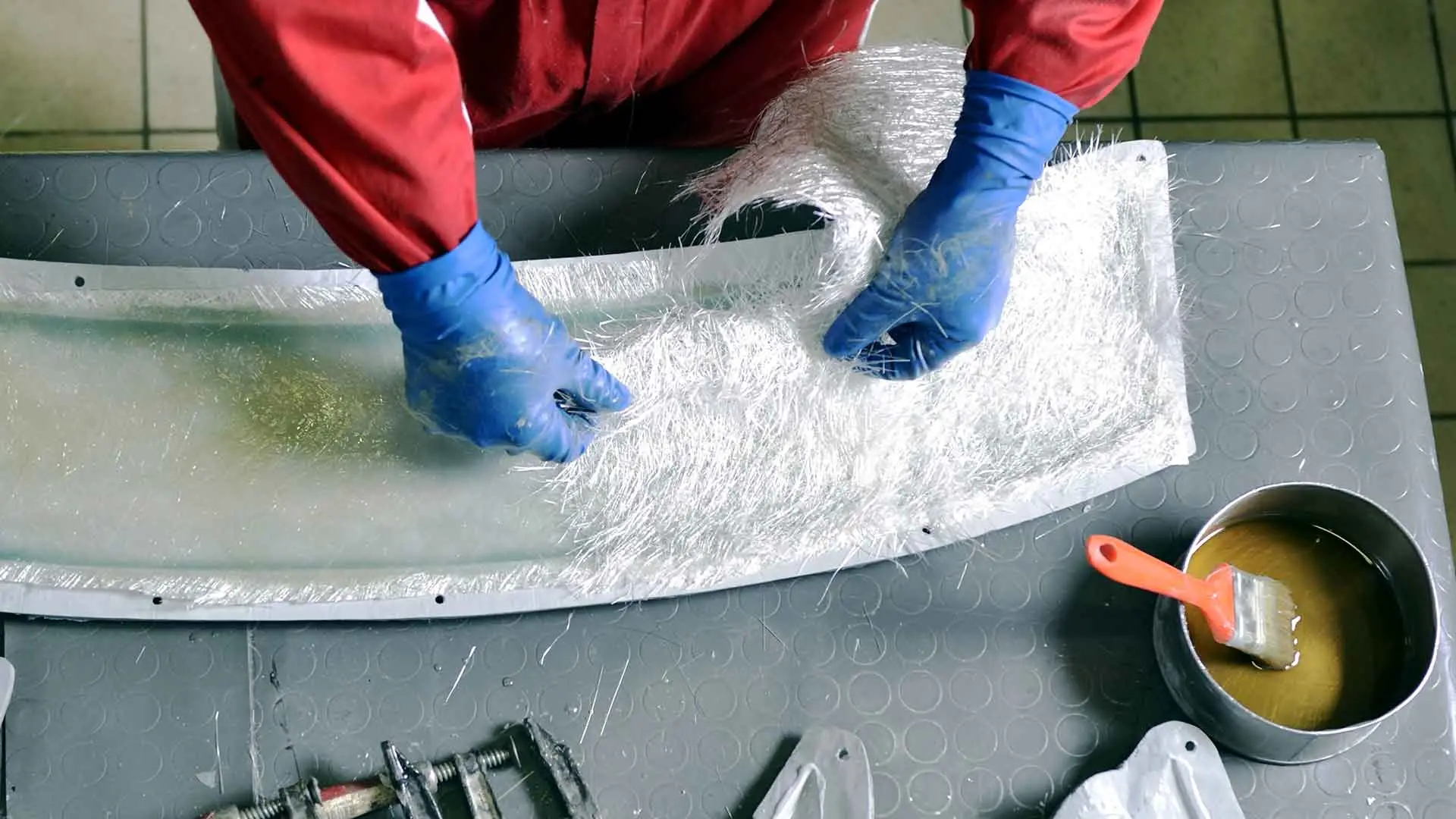
Gelcoat is typically applied at a thickness of 0.4mm to 0.6mm (400-600 microns). Both spray application and brush-on methods are used. It should be allowed to reach a tacky, “gel” state before the backing laminate is applied.