The Hand Lay-Up Process: A Beginner Guide to Fiberglass Laminating
The hand lay-up process is the oldest, simplest, and most widely used method for manufacturing fiberglass reinforced plastic (FRP) composite parts. It requires minimal equipment investment, making it accessible to small shops and large factories alike.
Step-by-Step Process
- Mold Preparation: The mold surface is cleaned, polished, and coated with a release agent (wax or PVA) to prevent the part from sticking.
- Gelcoat Application: A pigmented gelcoat resin is sprayed or brushed onto the mold surface at 400-600 microns thickness. This becomes the finished outer surface of the part.
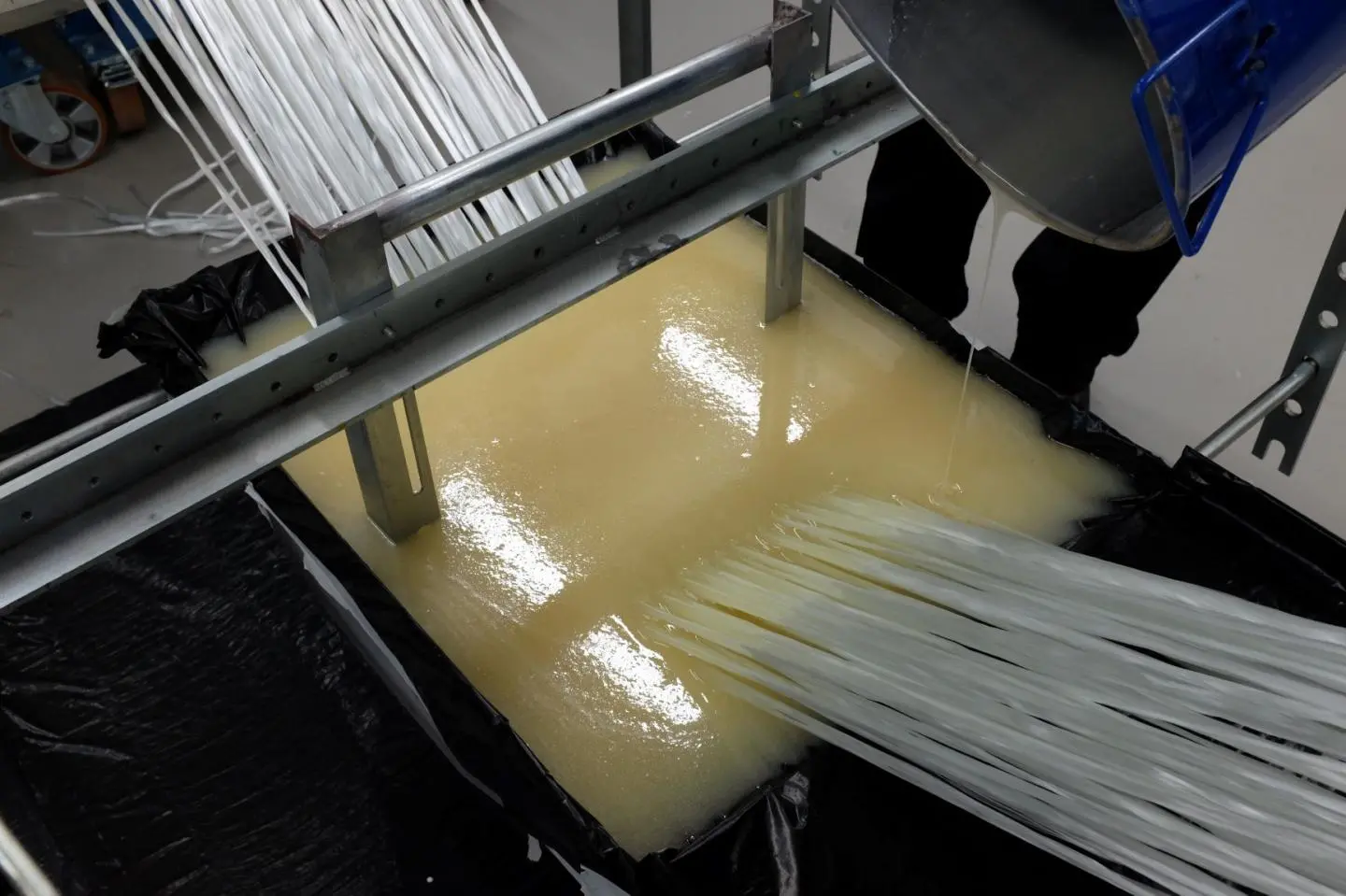
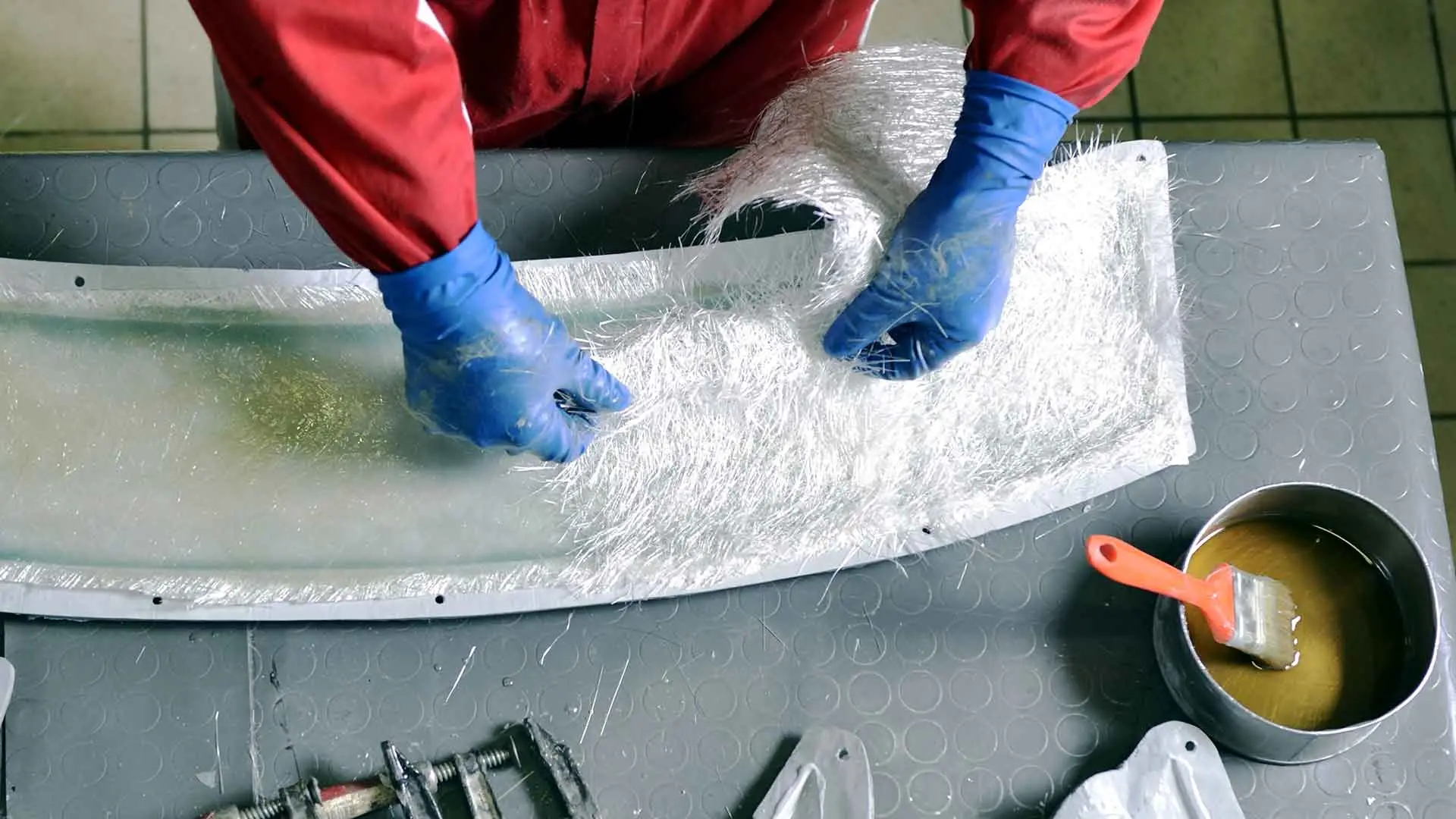
- Laminating: Once the gelcoat reaches a tacky state, layers of glass fiber reinforcement (typically chopped strand mat or woven roving) are placed into the mold. Catalyzed resin is poured over the fibers and rolled in using a consolidation roller to remove air bubbles and fully saturate the fibers.
- Build-Up: Additional layers of fiber and resin are added until the desired wall thickness and strength are achieved.
- Curing: The laminate is left to cure at room temperature (typically 2-4 hours for initial hardening).
- Demolding: The hardened part is removed from the mold, trimmed, and finished.
Advantages
- Low tooling cost (single-sided mold)
- Capable of producing very large parts (boats, pools, tanks)
- Flexible – easy to change designs
Limitations
- Labor-intensive and slow cycle times
- Only one smooth surface (the mold side)
- Higher styrene emissions compared to closed-mold processes