Vacuum Bagging in Composite Manufacturing: Benefits and Process Overview
Vacuum bagging is an intermediate composite manufacturing technique that dramatically improves the quality of hand-laid laminates by applying atmospheric pressure uniformly to the wet laminate during cure. It bridges the gap between basic open-mold hand lay-up and fully closed-mold processes like RTM.
The Vacuum Bagging Process
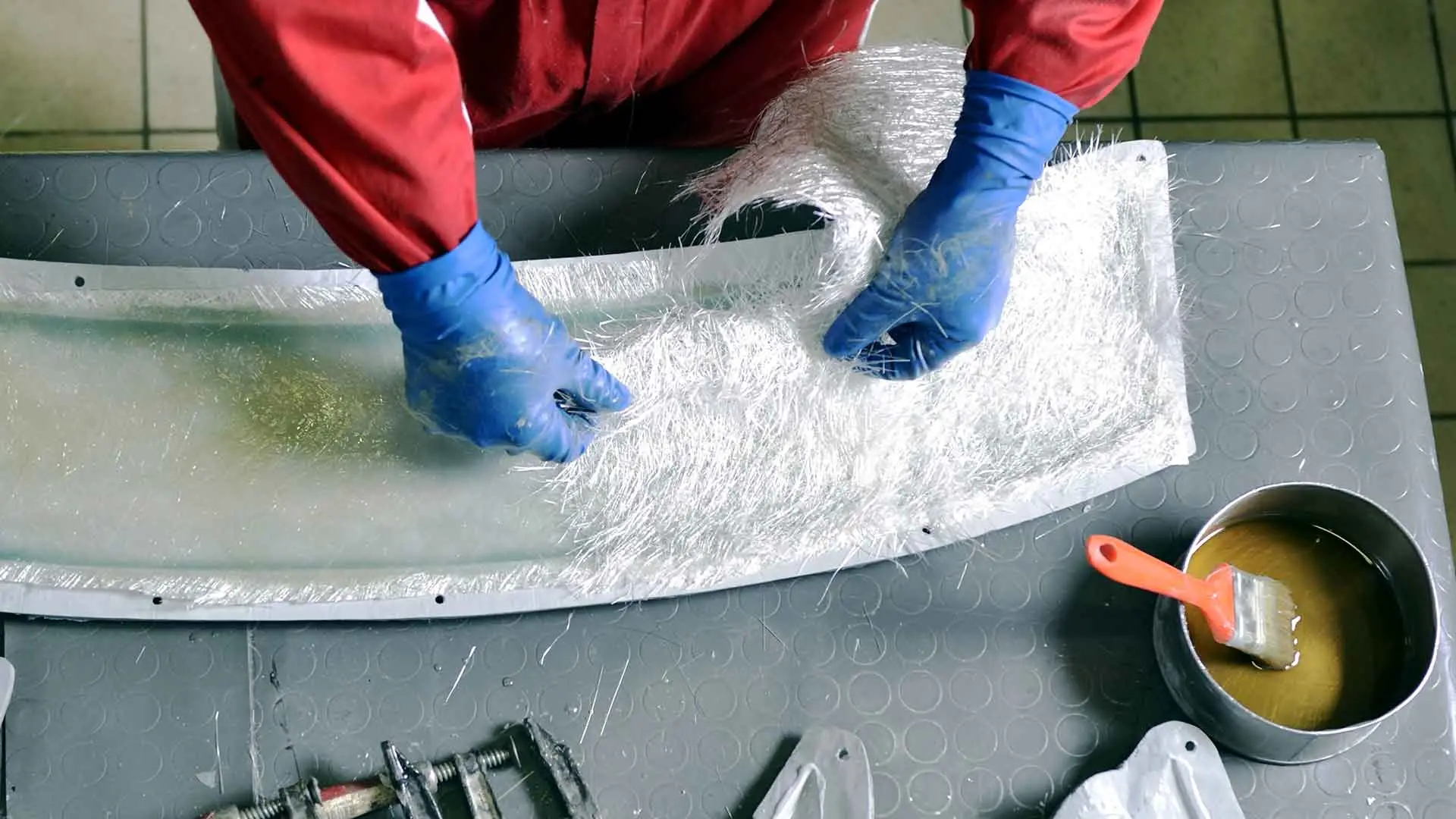
- Standard Lamination: The laminate is laid up in the mold using the conventional hand lay-up or wet lay-up method.
- Release Film: A perforated or non-perforated peel ply release film is placed over the wet laminate.
- Breather / Bleeder Fabric: An absorbent breather fabric is placed over the release film to absorb excess resin and distribute vacuum pressure evenly across the bag.
- Vacuum Bag: A flexible nylon or polyethylene film is placed over everything and sealed to the mold flange with sealant tape.
- Vacuum Application: A vacuum pump creates negative pressure inside the bag (typically 0.8 to 1.0 bar). Atmospheric pressure then pushes down on the bag from the outside.
- Cure: The laminate cures under sustained vacuum pressure.
Benefits Over Standard Hand Lay-Up
- Higher Fiber Volume Fraction: The pressure consolidates the laminate, squeezing out excess resin and increasing glass-to-resin ratio from ~30:70 to ~45:55.
- Fewer Voids: Vacuum pressure removes entrapped air and volatile gases, producing a denser, void-free laminate.
- Better Mechanical Properties: The higher fiber fraction directly translates to improved strength and stiffness in the finished part.
- Reduced Styrene Emissions: The sealed bag significantly reduces open-air styrene evaporation, improving shop safety.